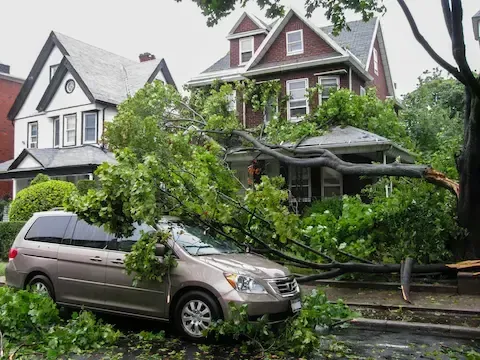
Post-Windstorm Tree Damage Check Mountlake Terrace
When a windstorm passes through Mountlake Terrace, the visible damage is only part of the story. Fallen branches and toppled fences get attention immediately, but the trees still standing on your property deserve a careful second look. Structural problems hidden in the canopy or just below the soil surface can become serious hazards within days or weeks of a major wind event. Walking your property with a methodical eye — not just a quick glance — is the right approach before you assume everything came through fine.
Why Post-Storm Tree Inspections Matter Here
Mountlake Terrace sits in a corridor where Pacific weather systems funnel through regularly, and the combination of saturated winter soils and sustained gusts creates conditions that stress trees in specific ways. When the ground is wet, root plates lose their grip and trees that showed no signs of trouble beforehand can lean, shift, or fail entirely. This is especially true for mature Douglas fir, big-leaf maple, and red alder — all common on residential lots throughout the city.
After a significant windstorm, the risk window stays open for several days. A tree that absorbed a major load during the storm may have cracked internally without showing obvious exterior damage. Those cracks widen and weaken the structure as the wood dries and shifts. Catching that condition early is the difference between a managed removal and an emergency.
What to Look for in the Canopy
Start at the top and work your way down. Look for hanging branches — what arborists call widow makers — that are suspended in the canopy and no longer attached to the tree. These can fall without warning, especially when wind picks back up or when another branch shifts. Even a modest-sized limb falling from height carries serious force.
Look for fresh splits at major branch unions. When two large limbs share a V-shaped crotch, that union is vulnerable under lateral wind load. A split at that point may still be holding, but the structural integrity is compromised. You may see exposed white or green wood, bark separation, or a visible gap at the union.
Check for broken limbs that appear to be resting on other branches. The crown can hold a surprising amount of suspended debris that isn't obvious from ground level, particularly in dense evergreen canopy. If you notice the crown looks asymmetrical or heavier on one side than before the storm, that's worth flagging.
Signs of Root and Base Damage
Walk to the base of each significant tree on your Mountlake Terrace property and look at the soil around the root zone. Soil heaving — where the ground has lifted or cracked in an arc around the base — indicates the root plate moved during the storm. Even if the tree appears upright now, root heave is a warning sign that the tree's anchorage has been compromised.
Look at the bark at the base of the trunk. Fresh cracks, bark separation, or areas where the bark appears to have sheared suggest significant stress was applied during the wind event. On older trees with existing decay, that stress can accelerate interior breakdown faster than it would in a healthy specimen.
Check for any lean that wasn't there before. A subtle new lean combined with soil disturbance at the base is one of the clearest indicators that a tree needs professional evaluation. Trees don't always lean dramatically — a change of even a few degrees in a large tree represents a significant shift in load distribution.
Common Post-Storm Mistakes to Avoid
One of the most common mistakes after a windstorm is treating visible cleanup as the whole job. Removing the fallen branches from your driveway and clearing the debris from your lawn is important, but it shouldn't end there. The trees that didn't fall need attention too.
Another frequent mistake is assuming that if a tree weathered this storm, it will weather the next one. Repeated wind events accumulate structural damage that isn't always visible. A tree that came through relatively intact may have developed internal cracks or lost root anchoring that makes it significantly more vulnerable going forward.
Trying to assess upper canopy damage from a ladder is also something homeowners should avoid. Climbing unstable trees or working near damaged limbs without proper equipment and training creates serious risk. If the damage is above what you can clearly see from the ground, that's a job for a certified arborist with climbing gear and experience reading tree structure.
When to Call for a Professional Assessment
Some situations call for professional eyes right away. If you see any of the following, don't wait to schedule an assessment: a tree leaning toward a structure, power lines, or a frequently used area; visible soil heave at the base; hanging limbs in the upper canopy; fresh splits at major branch junctions; bark separation at the trunk base; or a tree that appears to have shifted even slightly at the root zone.
For Mountlake Terrace residents dealing with multiple affected trees after a significant event, a full property walkthrough by a qualified arborist is the most efficient approach. They can prioritize which trees need immediate action, which need monitoring, and which came through without structural concern. That kind of triage prevents both the hazard of inaction and the unnecessary cost of removing trees that are actually fine.
You can also review our storm response notes for additional context on how we approach high-wind events in this area and what preparation looks like before a storm hits.
Getting the Right Help After the Storm
Working with a local service that understands the specific tree species, soil conditions, and weather patterns in Mountlake Terrace makes a real difference in post-storm assessment. Evaluating storm damage accurately requires knowing how Douglas fir responds to lateral load differently than maple, or how the clay-heavy soils in parts of Snohomish County affect root stability after saturation.
If your property took a hit this season and you want a professional eye on what's left standing, Storm Damage Cleanup services are available for Mountlake Terrace properties. Getting that assessment scheduled while the damage is fresh gives you the clearest picture of what needs to happen next — before the next weather system moves through.
