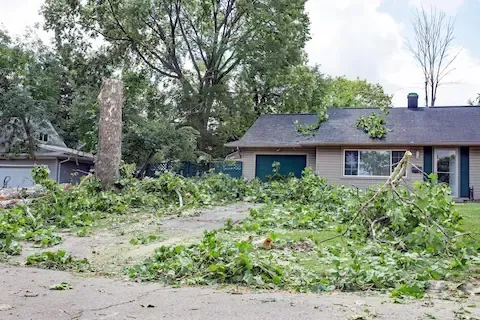
Winter Storm Tree Damage Prevention in Mountlake Terrace: Complete Protection Guide
<h1>Winter Storm Tree Damage Prevention in Mountlake Terrace: Complete Protection Guide</h1> <p>Mountlake Terrace's winter weather patterns create predictable stress cycles for your trees, yet most property owners wait until damage occurs before taking preventive action. The combination of our clay-heavy soils, steady October-through-March precipitation totaling thirty-five to forty inches, and episodic windstorms tracking through the Cascade convergence zone means your trees face compounding challenges throughout the season. Properties near Lake Ballinger experience different exposure than neighborhoods along the I-5 corridor, but all local trees benefit from systematic protection strategies implemented before conditions deteriorate.</p> <p>Prevention isn't about guaranteeing zero damage—severe weather events occasionally exceed what even perfectly maintained trees can withstand. Rather, it's about reducing probability and severity of failures, protecting your most valuable trees and highest-risk areas, and minimizing the likelihood you'll need <a href="https://mountlaketreecare.com/">emergency tree removal in Mountlake Terrace</a> when storms arrive. The work you complete during dry months determines whether winter brings manageable maintenance or property-damaging emergencies.</p> <h2>Understanding Mountlake Terrace's Specific Risk Factors</h2> <p>Our location creates weather patterns that differ from surrounding communities just miles away. The convergence zone effect occurs when marine air flowing around the Olympic Mountains meets from north and south, creating an area of enhanced precipitation and wind where the flows collide. Mountlake Terrace sits directly in this zone during many storm events, experiencing stronger sustained winds and heavier rainfall than areas slightly east or west of our position. This isn't occasional—it's a recurring pattern throughout winter that accumulates stress on trees over multiple events.</p> <p>Soil conditions amplify weather impacts in ways that don't affect properties with better-draining substrates. Our typical clay-based soils hold water efficiently, which benefits trees during summer but creates instability during winter saturation periods. When soil moisture content approaches field capacity and additional rain continues falling, the ground loses its ability to anchor root systems effectively. Trees that appear completely stable in August can uproot in January when identical wind speeds hit saturated soil conditions. This seasonal transformation makes fall the critical window for intervention—once saturation begins, your options become limited to emergency response rather than prevention.</p> <p>Microclimates within Mountlake Terrace create localized variations in tree stress. Properties at higher elevations near 244th Street SW accumulate ice during mixed precipitation events more readily than lower areas. Homes with southern exposures experience different freeze-thaw cycles than north-facing properties. Trees growing in clusters shelter each other from wind, but individual specimens in open areas face full exposure. Understanding your specific property's microclimate patterns helps prioritize which trees need intervention and what type of protection makes sense for your conditions.</p> <p>Urban infrastructure compounds natural stress factors. Pavement and buildings alter drainage patterns, concentrating runoff in ways that oversaturate some areas while leaving others relatively dry. Reflected heat from structures affects ice formation patterns. Underground utilities restrict root growth, forcing shallow development that reduces stability. Street trees face salt exposure from winter road treatments. These human-created stressors layer onto natural weather patterns, meaning urban trees often show damage at lower storm intensities than their forest counterparts.</p> <h2>Fall Assessment and Priority Identification</h2> <p>Effective prevention begins with systematic evaluation of every significant tree on your property. Walk your entire lot during September or early October when leaves are still present but before fall rains saturate the ground. Document each tree's location, species, approximate size, and relationship to structures or high-use areas. This inventory becomes your working document for prioritizing intervention and tracking changes over multiple seasons.</p> <p>Start ground-level inspections at the root flare—where trunk meets soil. Look for recent soil mounding on one side of the tree and corresponding gaps on the opposite side, indicating root plate movement. Fungal growth at the trunk base, particularly shelf fungi or conks, signals internal decay that compromises structural integrity regardless of how healthy the crown appears. Exposed roots showing decay or damage, especially on the side facing prevailing winds, reduce anchorage capacity substantially. These signs don't always mean immediate removal, but they identify trees requiring professional assessment before winter.</p> <p>Examine trunk structure from base to canopy. Vertical cracks or seams indicate internal stress or previous storm damage that never fully healed. Cavities and hollows reduce load-bearing capacity—a tree can tolerate some internal decay, but voids exceeding one-third of the trunk diameter at any point create significant failure risk. Lean that has developed recently differs from lean that's been present for years—new lean suggests ongoing root failure or internal structural problems. Codominant stems with included bark create weak unions susceptible to splitting when ice loads one side more than the other.</p> <p>Crown evaluation reveals loading patterns and stress distribution. Dead branches throughout the canopy indicate disease, pest problems, or environmental stress that weakens the entire tree. Large branches extending well beyond the main canopy structure catch disproportionate wind and ice loads. Asymmetric crowns create uneven weight distribution that matters more during ice accumulation than during wind-only events. Dense canopies with little interior air flow concentrate wind pressure rather than allowing passage through the structure. Each of these factors compounds when combined with species-specific vulnerabilities and site exposure.</p> <p>Priority ranking guides resource allocation when you can't address every tree simultaneously. Trees overhanging occupied structures receive highest priority—failure directly threatens buildings and occupants. Trees near power lines rank next due to service disruption and fire risk from contact. Large trees adjacent to property lines warrant attention because failures can damage neighbor property and create liability. Trees in high-traffic areas—near driveways, walkways, or gathering spaces—pose injury risks that justify intervention even when structural damage risk is low. Trees in open areas away from valuable targets can tolerate higher risk thresholds.</p> <h2>Structural Pruning for Winter Resilience</h2> <p>Proper pruning reduces wind resistance, eliminates obvious hazards, and redistributes loads to prevent failures—but only when executed correctly. Poor pruning creates more problems than it solves, opening wounds that won't compartmentalize properly, redirecting stress to weaker attachment points, and stimulating vigorous regrowth that increases future maintenance requirements. Understanding the difference between appropriate reduction and harmful topping determines whether your investment improves tree health or accelerates decline.</p> <p>Crown thinning removes selective interior branches to allow wind passage while maintaining the tree's natural architecture. Target crossing branches that rub and create wounds, water sprouts growing vertically from horizontal limbs, and small-diameter growth in dense clusters where branches compete for space. The goal is reducing overall canopy density by fifteen to twenty-five percent, not stripping the interior bare. Proper thinning leaves the tree's silhouette largely unchanged from a distance while opening the structure to reduce wind loading and improve light penetration.</p> <p>Deadwood removal eliminates the most obvious winter hazards but requires careful execution. Dead branches are often under tension from surrounding live wood, and they can break unpredictably during cutting. Size matters—removing dead twigs under two inches diameter presents minimal risk, but large dead limbs require rigging to control their descent. Location determines urgency—dead branches over structures, vehicles, or high-traffic areas need removal regardless of size, while deadwood in the upper canopy away from targets can remain until more comprehensive work makes access practical.</p> <p>End-weight reduction addresses branches extending beyond the main canopy structure. These outliers function as levers during wind events, creating rotational forces at their attachment points that can tear them from the trunk. Ice accumulation multiplies this effect—a branch barely moving in wind becomes a massive pendulum when coated with inch-thick ice. Proper reduction cuts return to lateral branches capable of assuming the terminal role, typically removing one-third or less of the original branch length. Indiscriminate stub cuts invite decay and create clusters of weak regrowth that require repeated maintenance.</p> <p>Timing considerations balance wound closure against seasonal constraints. Late summer through early fall allows some compartmentalization before winter dormancy, though most Pacific Northwest species tolerate winter pruning well. Avoid pruning during spring flush when sap flow is most active—wounds bleed excessively and attract insects. Never prune during active ice storms or when branches are frozen solid—you can't properly evaluate branch structure when visibility is poor, and the work itself becomes unnecessarily dangerous. If conditions have deteriorated before you've completed planned pruning, postpone non-emergency work until weather improves.</p> <h3>Species-Specific Pruning Approaches</h3> <p>Western red cedars naturally shed interior and lower branches as part of their growth pattern, but they also develop heavy canopies on relatively flexible wood. Thinning focuses on reducing sail area in the outer canopy while accepting some interior dieback as normal. These trees rarely benefit from aggressive reduction—their growth form doesn't respond well to heading cuts, and they compartmentalize wounds poorly. Conservative thinning and deadwood removal provide the best risk reduction without stimulating problematic regrowth.</p> <p>Douglas firs develop strong central leaders and relatively strong branch attachments, but they accumulate ice efficiently during mixed precipitation. Pruning targets branches with included bark—visible as tight V-shaped crotches rather than U-shaped unions—and removes competing leaders before they reach sizes that make removal wounds significant. End-weight reduction on lower branches prevents leverage failures during ice events. These trees tolerate pruning well and compartmentalize properly when cuts are made correctly.</p> <p>Bigleaf maples produce brittle wood that snaps rather than bends under load. They also develop rapid regrowth following pruning, requiring careful consideration of how cuts will affect future maintenance needs. Focus on removing crossing branches that will eventually rub and fail, and reduce extended limbs before they reach sizes that create major wounds during eventual removal. Maples bleed heavily when pruned during spring sap flow, so schedule work for late summer or winter dormancy.</p> <h2>Root Zone Protection and Soil Management</h2> <p>Tree stability begins underground where root systems anchor trunks against wind loads and prevent uprooting during saturation. Our clay-based soils develop excellent anchorage when properly managed but become liability when compacted, waterlogged, or damaged by construction activity. Prevention strategies address both soil conditions and root health to maximize stability before winter stress arrives.</p> <p>Drainage improvements reduce saturation-related failures more effectively than any above-ground intervention. French drains installed outside the critical root zone redirect surface water away from tree bases without severing major roots. Dry wells collect roof runoff that would otherwise concentrate near foundations and tree root zones. Grading adjustments move standing water away from trees while maintaining appropriate soil levels around trunks—raising or lowering grade more than a few inches damages roots and changes moisture patterns in ways that stress trees significantly.</p> <p>Soil aeration alleviates compaction from foot traffic, vehicle parking, or construction equipment. Core aeration in the root zone—from trunk to beyond dripline—improves oxygen penetration and water infiltration without disturbing roots the way rototilling would. Vertical mulching involves drilling holes throughout the root zone and backfilling with compost to create pathways for air and water movement through compacted clay. These interventions work best when completed during dry soil conditions in late summer, giving roots time to respond before winter saturation begins.</p> <p>Mulching provides multiple benefits when applied correctly. Organic mulch three to four inches deep extending to the dripline moderates soil temperature, improves moisture retention during dry periods, and gradually improves soil structure as it decomposes. Avoid volcano mulching—piling material against the trunk creates moisture conditions that promote decay and attract pests. Keep mulch several inches away from bark and spread it wide rather than deep. Refresh mulch annually to maintain depth as lower layers decompose and incorporate into soil.</p> <p>Root protection zones extend well beyond visible canopy. The critical root zone typically reaches one and a half times the dripline radius, and disturbance anywhere in this area affects stability. Trenching for utilities, installing irrigation systems, or excavating for landscaping projects within this zone severs major roots that never regenerate. Trees adapt to root loss by shifting their center of gravity or developing compensatory growth, but they don't recover—they manage reduced capacity. Planning construction and landscaping around these protection zones prevents stability problems that manifest years after the initial damage.</p> <h2>Support Systems for High-Value Trees</h2> <p>Supplemental support extends the viable life of valuable trees showing structural weaknesses that don't yet justify removal. Properly designed systems redistribute loads, prevent catastrophic failures, and buy time for trees to develop compensatory growth. Improper systems accelerate decline by restricting natural movement, creating new stress points, or giving false confidence that leads to neglecting other necessary maintenance.</p> <p>Dynamic cabling uses synthetic rope materials that allow controlled movement while preventing excessive loading. Unlike rigid steel cables that completely restrict motion, modern systems permit enough sway for the tree to develop reaction wood that strengthens over time. Installation points require careful selection—too low provides insufficient support, too high concentrates stress in areas lacking sufficient strength. Professional installation ensures proper hardware selection, correct tensioning, and appropriate anchor point placement for your specific tree structure and loading patterns.</p> <p>Bracing rods provide rigid support for splits that have already initiated. Threaded steel rods pass completely through the trunk or branches, physically holding separating sections together. Installation requires precision drilling perpendicular to the split line and proper torquing to create compression without crushing internal wood structure. Brace rods work best as part of comprehensive support systems rather than standalone interventions—they prevent split propagation but don't address the underlying structural weakness that caused the split initially.</p> <p>Support system maintenance determines long-term effectiveness. Synthetic cables degrade under UV exposure and require replacement on schedules determined by material specifications and local exposure conditions—typically five to ten years for quality materials properly installed. Tree growth can engulf attachment hardware, requiring periodic adjustment to prevent girdling as diameter increases. Storm events that load the system beyond design parameters may cause hidden damage requiring professional inspection to identify. Annual inspection identifies developing problems before they compromise system function.</p> <p>Not every tree justifies support system investment. Advanced decay that compromises more than half the trunk diameter, extensive root damage affecting multiple quadrants, or fundamental structural flaws like large included-bark unions in primary scaffolds make removal safer than attempting life extension. Support systems also create ongoing maintenance obligations and inspection costs that accumulate over years. Professional assessment weighs system costs against tree value, replacement expenses, and risk tolerance to determine when cabling makes economic and safety sense.</p> <h2>Emergency Preparedness and Response Planning</h2> <p>Prevention reduces emergency probability but can't eliminate it entirely—severe weather occasionally exceeds what even perfectly maintained trees can withstand. Having plans in place before storms arrive means knowing exactly what to do when conditions deteriorate, who to contact for help, and how to document situations for insurance purposes. This preparation transforms chaotic emergencies into manageable incidents with clear action steps.</p> <p>Document baseline conditions through photography during calm weather. Image each significant tree from multiple angles showing its relationship to structures, capture close-ups of existing defects or previous damage, and photograph the overall property layout. Time-stamped photos establish pre-storm conditions for insurance claims and provide professionals with information they can use to plan response before arriving on site. Update documentation after any significant tree work or property changes—outdated photos create confusion during claims processes.</p> <p>Contact lists should include certified arborists and tree services, utility company emergency lines, your insurance agent and company claims number, and the city's storm response hotline. Maintain this information in multiple formats—digital copies on your phone, printed lists in accessible locations, and cloud storage accessible from any device. Power outages prevent internet access, so physical copies become critical when you need them most. Include account numbers, policy numbers, and specific details that prevent delays when reporting emergencies under stressful conditions.</p> <p>Access planning determines how quickly problems can be addressed when failures occur. Ensure gates are serviceable and that you know override procedures for electric openers during power outages. Identify equipment access routes—narrow side yards or low-clearance areas that prevent bucket truck or crane access limit response options significantly. Know utility shutoff locations for electric, gas, and water in case tree failures damage service lines. Clear these areas of stored items, vehicles, or other obstacles that would delay emergency access during actual events.</p> <p>Insurance review clarifies exactly what coverage you have before you need to file claims. Standard homeowner policies typically cover sudden tree failures that damage structures but may not cover removal of trees that fall in yards away from buildings. They generally don't cover failures from neglect—if you knew a tree was hazardous and failed to address it, coverage may be denied. Understand your deductible, coverage limits, and requirements for emergency mitigation versus non-emergency repairs. High-value trees sometimes warrant specific riders that provide replacement coverage beyond standard landscaping limits.</p> <p>Your investment in prevention—through systematic assessment, appropriate pruning, soil management, and comprehensive planning—determines whether winter storms become routine seasonal events or property-damaging emergencies. Trees that receive attention during calm weather withstand typical storm conditions without incident, while neglected specimens progressively weaken until failure becomes inevitable rather than possible. The work you complete now directly impacts the calls you make when weather deteriorates and prevention gives way to response.</p>