When to Call Emergency Tree Removal Mountlake Terrace
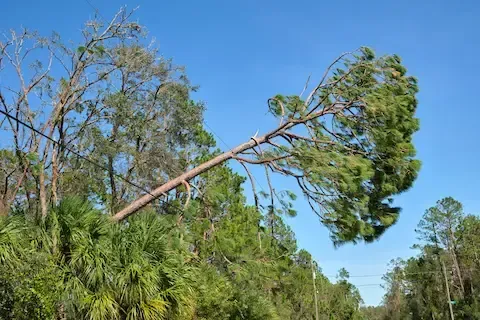
If a tree in Mountlake Terrace is leaning toward your home, showing large cracks in its trunk, has exposed or heaving roots after a storm, or has dropped major limbs without warning, call emergency tree removal immediately. These are not situations to monitor and revisit. A structurally compromised tree can fall within hours, especially during the wet, windy conditions common across Snohomish County. If the tree poses a direct threat to a structure, vehicle, utility line, or person, the window for safe action is narrow. Do not wait for a scheduled appointment.
What Are the Signs a Tree Needs Emergency Removal?
The clearest signs that a Mountlake Terrace tree requires emergency removal include a sudden or dramatic lean, visible trunk cracks running vertically or through major limbs, a split leader (where the central trunk has divided and one side is failing), root heaving where the soil around the base is lifting or cracking, and hanging or partially attached limbs caught in the canopy. Any one of these conditions means the tree is structurally unstable. Combined with wind or rain — both common in the greater Puget Sound area — these trees become active hazards.
How Is a Leaning Tree Different From a Normal One?
Many trees grow with a natural lean that developed gradually over years. That is not an emergency. The lean that requires an emergency call is one that has changed recently — a tree that was upright last week and is now tilted, or one that shifted visibly during or after a storm. Soil disturbance around the base is the key indicator. If the ground around the root zone is pushed up, cracked, or soft on one side, the root plate is losing its grip. In Mountlake Terrace's clay-heavy soils, waterlogged ground after heavy rain dramatically reduces the anchoring strength of even large, mature trees.
Does Storm Damage Always Require Emergency Removal?
Not always, but it requires an immediate professional assessment. A tree that lost a few smaller limbs in a windstorm may be structurally sound and can be pruned safely on a standard schedule. However, if the storm caused a major crown break, exposed the heartwood of the trunk, or caused the root zone to shift, emergency removal is likely the right call. The issue is that storm-damaged trees can appear stable while internal failure has already begun. In the Pacific Northwest, where storms arrive in sequences rather than isolated events, a tree weakened by one storm is at serious risk in the next.
When Do Hanging Limbs Become an Emergency?
Arborists call them widow makers — large limbs that are broken but still suspended in the canopy, held in place by other branches or bark. These are emergencies. They can fall without warning and with tremendous force. If you see a limb that is cracked, angled unnaturally, or dangling in a tree near your Mountlake Terrace home, driveway, or yard, keep people and pets away from the area and call for Emergency Tree Removal right away. Do not attempt to dislodge the limb yourself. Even trained crews use specialized rigging to handle suspended limbs safely.
What If the Tree Is Touching or Near a Power Line?
This situation moves beyond tree service territory. If a tree or limb is in contact with a power line, do not touch the tree, do not approach the area, and call Puget Sound Energy before calling a tree company. Power line contact is a life-safety issue that utility crews must address first. Once the line is confirmed safe or de-energized, a qualified Mountlake Terrace tree service can remove the tree or limb. Some emergency tree companies coordinate directly with utilities on these situations — ask when you call.
How Do You Know If a Tree Is Dead or Just Stressed?
A dead tree does not always need immediate emergency removal, but it does need prompt attention. Dead trees lose structural integrity over time as internal wood decays, and they are significantly more likely to fail in wind or rain. Signs of a dead or dying tree include no leaf growth during the growing season, bark that is peeling away in large sections, brittle twigs that snap cleanly rather than bending, and fungal growth at the base or on the trunk. If a dead tree is located near any structure or high-traffic area in Mountlake Terrace, schedule removal quickly — it may not be a same-day emergency, but it should not wait months either. For more on emergency removals and how different risk factors are evaluated, that resource covers the assessment process in detail.
What Should You Do While Waiting for the Crew to Arrive?
Keep all people and animals away from the zone where the tree could fall. If it is safe to do so, move vehicles out of that area. Do not park equipment or store anything under a compromised tree. If the tree is near your home and weather is worsening, contact your homeowner's insurance company to document the situation — photographs taken before removal are useful for claims. Do not attempt to cut limbs or brace the tree yourself. Partially cut limbs and impromptu supports create unpredictable load shifts that can accelerate failure. Wait for the crew, keep the area clear, and let professionals manage the hazard.
