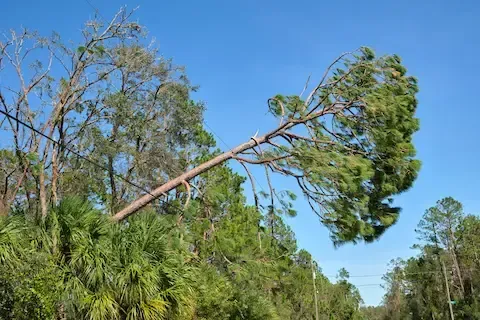
Leaning Tree Risks on Mountlake Terrace Properties
Soil Movement and Root Plate Assessment
The foundation of leaning tree evaluation begins with examining the root plate and surrounding soil conditions. In Mountlake Terrace's clay-heavy soils, water saturation can cause dramatic changes in soil stability, leading to root plate movement that wasn't visible during dry conditions. Fresh soil heaving around the base indicates recent movement, while established vegetation growing on raised soil suggests an older, potentially stable lean.
Look for cracks radiating outward from the trunk base, particularly on the side opposite the lean direction. These fissures indicate root system failure and suggest the tree's anchor system is compromised. Fresh exposed roots, especially major structural roots, signal ongoing destabilization that requires professional evaluation. The size and extent of soil disturbance often correlates directly with the urgency of removal needs.
Root plate lift creates a fulcrum effect where the tree's weight amplifies leverage forces. A root plate raised more than six inches typically indicates severe structural compromise requiring Emergency Tree Removal. Measuring the angle of lean provides quantitative data, but soil conditions and root plate integrity matter more than lean angle alone in determining immediate risk.
Canopy Weight Distribution Analysis
The distribution of foliage and branch weight significantly affects a leaning tree's stability and failure potential. Trees with heavy canopy weight concentrated on the lean side experience amplified gravitational stress, while those with balanced or opposite-side weight distribution may maintain stability despite significant trunk angles. Seasonal factors compound these dynamics, as leaf-out periods add substantial weight during Mountlake Terrace's windy spring months.
Dead or dying branches concentrated in the upper canopy create unpredictable weight shifts and increase failure risk during wind events. Large branches extending beyond the root plate footprint create leverage that can accelerate lean progression. Professional evaluation should consider not just current weight distribution but potential changes from seasonal growth, branch loss, or weather loading.
Recent storms may have caused unseen branch damage that alters weight balance. Cracked or split branches hanging in the canopy represent immediate hazards that can fall without warning, while their eventual loss will change the tree's center of gravity. These dynamic factors require ongoing monitoring rather than one-time assessment.
Structural Integrity Indicators
Visible signs of structural compromise provide critical data for assessing immediate vs. long-term risk. Compression folds on the lean side of the trunk indicate wood fiber failure under stress, while tension cracks on the opposite side suggest the tree is approaching its breaking point. These symptoms often appear gradually but can accelerate rapidly under additional stress from wind or precipitation.
Bark separation or abnormal swelling at the trunk base signals internal wood failure. Fungal growth, particularly bracket fungi, indicates decay that compromises structural integrity regardless of lean angle. Sound wood can support surprising lean angles, while decay significantly reduces safe load tolerances. For guidance on systematic evaluation approaches, consult our emergency removal notes for detailed assessment protocols.
Cavity formation or hollow sections dramatically reduce structural capacity. Even small visible cavities may indicate extensive internal decay. Professional assessment tools like resistograph testing can quantify internal wood density and identify hidden structural weaknesses that visual inspection cannot detect.
Environmental Risk Multipliers
Mountlake Terrace's specific environmental conditions create risk multipliers that accelerate leaning tree failures. The area's frequent winter storms combine high winds with saturated soils, creating perfect conditions for root plate failure. Properties near Lake Ballinger or other water bodies experience additional soil saturation that reduces root anchoring capacity.
Proximity to structures, power lines, or high-traffic areas transforms a leaning tree from a landscape concern into a liability issue. Trees leaning toward buildings require more conservative risk assessment than those leaning toward open areas. The potential impact zone extends well beyond the tree's height, as falling debris and bouncing trunk sections can travel significant distances.
Soil compaction from construction or heavy foot traffic reduces root system health and anchoring capacity. Recent excavation or grade changes near the root zone may have compromised structural roots without obvious surface symptoms. These factors require consideration of long-term stability trends rather than just current conditions.
Progressive vs. Static Lean Evaluation
Distinguishing between progressive lean development and static positioning determines the urgency of intervention. Progressive lean shows evidence of recent movement: fresh soil cracks, newly exposed roots, or changing trunk angle over time. These trees present immediate risk requiring prompt professional evaluation and likely removal.
Static leans develop over many years without recent movement signs. Established vegetation around the root plate, weathered soil disturbance, and stable trunk angles suggest the tree has reached equilibrium. However, external factors like soil saturation, wind events, or canopy changes can destabilize previously static leans.
Monitoring techniques help differentiate between progressive and static conditions. Simple measurements of lean angle, root plate height, and soil crack patterns taken over several months provide objective data about movement trends. Digital photos from consistent positions create visual records for comparison over time.
Professional Assessment Triggers
Certain conditions require immediate professional evaluation regardless of other factors. Any visible root plate lifting, fresh soil heaving, or recent change in lean angle indicates active failure processes. Trees showing signs of internal decay, significant canopy dieback, or structural damage need expert assessment to determine safe retention options versus removal necessity.
Property owners should prioritize professional evaluation for leaning trees within falling distance of structures, power lines, or areas of regular human activity. The liability implications of delaying assessment far exceed the cost of professional evaluation, particularly given Mountlake Terrace's frequent severe weather events.
Emergency evaluation becomes critical during or immediately after major weather events. Wind and rain can rapidly destabilize previously stable leans, creating immediate hazards that require prompt response. Establishing relationships with qualified arborists before emergency situations ensures rapid access to professional assessment when conditions are most dangerous.
Long-term Property Protection Strategy
Addressing leaning tree risks requires balancing immediate safety concerns with long-term landscape goals. Some leaning trees can be stabilized through cabling, guying, or selective crown reduction, while others present ongoing liability requiring removal. Professional assessment provides options for risk mitigation that preserve desirable trees while eliminating dangerous ones.
Regular monitoring schedules help identify developing problems before they become emergencies. Annual assessments of known leaning trees, combined with post-storm evaluations, provide early warning of changing conditions. Documented assessment records also support insurance claims and demonstrate due diligence for liability protection.
Proactive tree care, including proper pruning, soil management, and health maintenance, reduces the likelihood of developing dangerous leans. Strategic removal of declining trees before they develop structural problems eliminates future risk while allowing planned replacement with appropriate species for specific site conditions.
