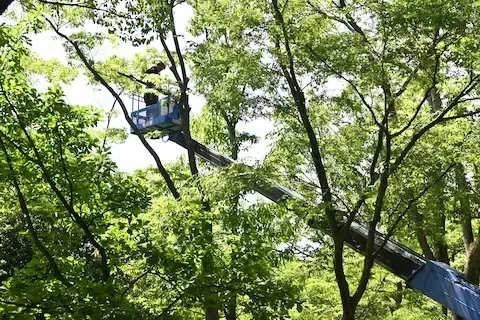
When Crane Removal Is Required in Mountlake Terrace
Not every tree removal in Mountlake Terrace requires a crane — but when one does, the decision usually isn't optional. Certain tree conditions, site configurations, and structural risks make crane-assisted removal the only method that keeps a job safe and property damage to a minimum. Understanding what pushes a removal into crane territory helps you evaluate your situation before a crew ever shows up.
Structure Proximity Is the Primary Trigger
The single most common reason a crane becomes necessary is the relationship between the tree and what surrounds it. When a large tree is positioned close to a house, garage, fence line, or utility corridor, there's no safe fall zone available for conventional felling. In Mountlake Terrace, many residential lots were developed with mature trees that have grown into or over structures over decades. A Douglas fir or big-leaf maple that once had clearance around it may now overhang a roof, power drop, or detached outbuilding.
When the canopy extends over a structure by more than a few feet and the trunk diameter pushes past sixteen to eighteen inches, sectional climbing removal becomes high-risk. A climber cutting from above still has to manage where each section falls, and a landing zone that's occupied by a roof leaves no margin. A crane eliminates that problem by lifting sections out vertically rather than dropping them.
Tree Size Thresholds That Change the Calculation
Size alone can drive the decision even when the surrounding area is relatively open. Very large trees — those with trunks exceeding twenty-four inches in diameter and heights over sixty feet — create rigging loads that climbing gear isn't designed to handle efficiently. A climber can section a large tree safely in many cases, but when the wood volume per section becomes extreme, the weight of each cut piece strains hand-rigging systems and increases the time and physical exposure involved significantly.
Crane removal in those cases isn't just about safety — it's about precision. A crane operator working with a skilled ground crew can lift multi-hundred-pound sections cleanly and place them in a controlled laydown area. That level of control becomes increasingly important when the tree is large and the consequences of a dropped piece are severe.
Canopy Weight and Structural Condition
A tree doesn't have to be a record-setter to require a crane. Canopy density and wood condition matter as much as raw size. A mid-sized alder or cottonwood that has been water-stressed or affected by fungal decay can have wood that fractures unpredictably under the stress of rigging cuts. When a climber can't trust how the wood will behave — because decay columns run through the trunk or major limbs show signs of internal failure — working from inside that canopy becomes genuinely dangerous.
In those cases, a crane allows the crew to work from outside the failure zone. The lift takes the weight load off the wood before cuts are made, which reduces the risk of unexpected movement, splitting, or collapse during the removal process. This is particularly relevant in Mountlake Terrace, where heavy rainfall and the region's natural fungal environment can accelerate decay in species like big-leaf maple, red alder, and some ornamental cherries faster than homeowners expect.
When Climbing Becomes Unsafe
Professional climbers are trained to assess the tree before they commit to working in it. If the anchor points — the branch unions and upper trunk sections that support a climber's system — are compromised, the job requires a different approach. A tree with a significant lean, root plate lift, or crown dieback that eliminates suitable tie-in points may not be safely climbable at all.
Leaning trees over structures present a specific version of this problem. A tree leaning toward a house with a compromised root system can't be safely rigged from above because any additional load placed on it may accelerate failure. In those situations, a crane provides external support during sectioning, giving the crew control over the tree's movement rather than relying on wood that may be unreliable.
For professional tree removal that accounts for these site-specific risks, the right equipment decision starts before the job begins.
Lot Configuration and Access Considerations
Mountlake Terrace lots vary significantly in configuration. Some properties have long, narrow side yards or rear-access constraints that limit where a conventional crew can stage equipment and move material. When a large tree sits at the back of a lot that has no side access, rigging rope systems from the street or driveway require extreme spans that multiply the forces involved and reduce control.
A crane positioned on the street or in a driveway can reach over a structure to access a backyard tree without requiring any ground-level path through the property. This is one of the more practical reasons crane removal is used even when the tree itself might technically be within climbing range — the extraction problem requires a different solution than the cutting problem.
If you're trying to understand what a job like this involves from start to finish, the crane removal walkthrough covers the full sequence in more detail.
What the Assessment Process Looks Like
A qualified crew evaluating your property will look at several things simultaneously: the tree's height, trunk diameter, and species; the condition of the wood and root system; the proximity to structures, utilities, and fencing; available staging and laydown space; and the angle and direction of any lean. No single factor determines the outcome — it's the combination that either permits standard removal or points clearly toward a crane.
In many cases, homeowners are surprised that the decision was driven by the lot layout rather than the tree itself. A sixty-foot tree in an open field is a very different job than a forty-five-foot tree backed against a fence with a garage on one side and a power drop on the other. Mountlake Terrace properties often match that second description closely, which is why crane removal is a regular part of how work gets done here, not an exceptional measure.
