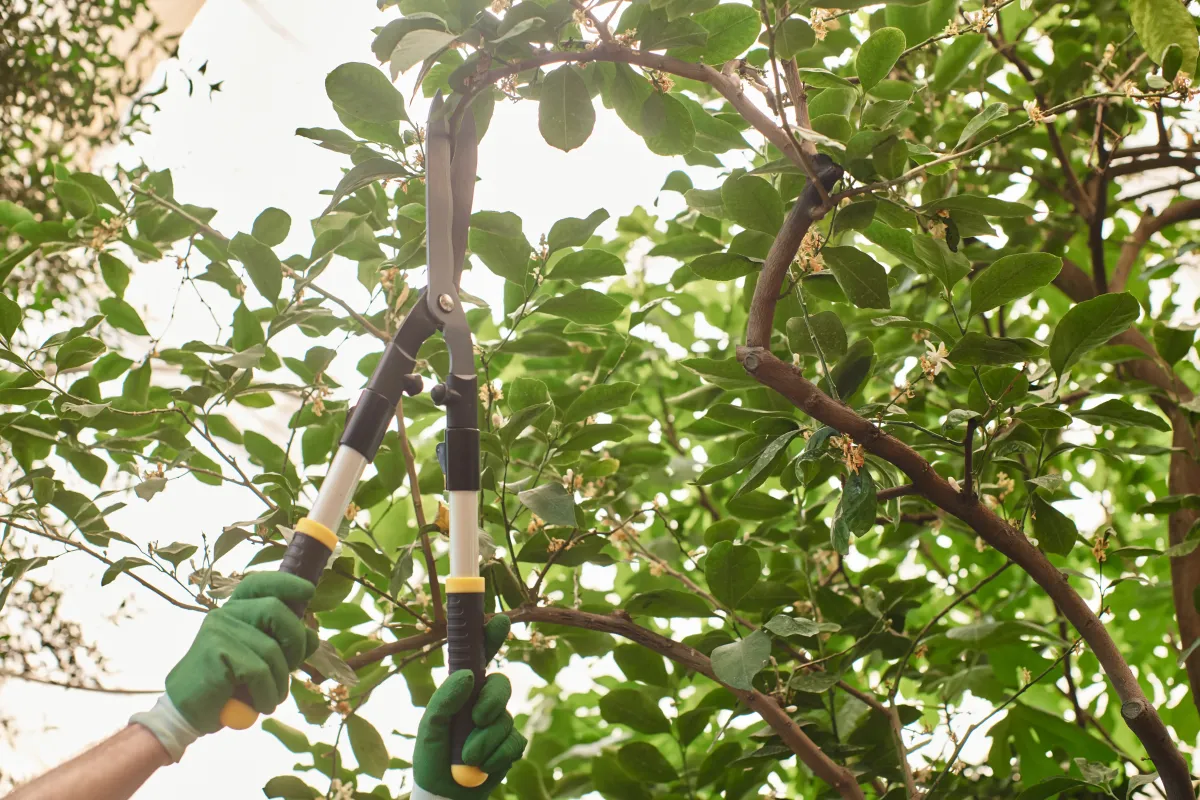
Spring Tree Pruning Timing in Mountlake Terrace WA
Timing is one of the most consequential decisions in tree care, and in Mountlake Terrace, the Pacific Northwest climate creates a window that rewards attentive homeowners and punishes guesswork. Western Washington's mild, wet winters and compressed springs mean the gap between ideal pruning conditions and active growth is shorter than most people expect. Getting the timing right protects your trees from disease, encourages strong structure, and reduces the risk of pest entry during the most vulnerable period of the growing season.
Why the Late-Winter Window Matters in Mountlake Terrace
The optimal pruning window for most deciduous trees in Mountlake Terrace runs from late January through mid-March. During this period, trees are still fully dormant, sap movement is minimal, and the cut surfaces heal quickly once growth resumes. Dormant pruning also removes overwintering pest habitat and allows you to see branch structure clearly without foliage in the way.
What makes the Puget Sound region distinct is the pace of bud break. Unlike climates with a hard freeze extending into April, Mountlake Terrace trees often begin pushing buds as early as late February during warm spells. Once bud swell is visible, every cut competes with the tree's energy investment in those emerging growth tips. Pruning at that stage does not ruin a tree, but it does cost the tree stored energy and slows the callusing response that seals wounds against fungal infection.
The practical takeaway: schedule dormant pruning before the first week of March when possible. If you are working with a large property or multiple trees, start in February and treat the late-March period as a hard deadline for most species.
Species That Demand Early Pruning
Not all trees respond to late pruning equally. Several common Mountlake Terrace species carry genuine risks if pruned after bud break or into active growth.
Cherries and ornamental flowering trees: Prunus species are highly susceptible to bacterial canker and silver leaf disease. Both pathogens enter through fresh cuts, and their spore activity peaks in cool, wet spring conditions — exactly what Mountlake Terrace delivers from March through May. Prune cherries, plums, and flowering cherries in late summer or early autumn, or during the heart of dormancy in January and February. Avoid spring cuts almost entirely.
Birch: Paper birch and other Betula species bleed heavily when pruned in late winter through spring. The sap flow does not harm the tree structurally, but the moisture attracts bronze birch borer, a pest that has expanded its range into the greater Seattle area. Pruning birch in late summer after growth has hardened off reduces attractant-related risk considerably.
Maples: Big-leaf maples, the signature street and yard tree in Mountlake Terrace, can be pruned in late dormancy, but heavy bleeding is common. For structural work, late summer is less messy and equally safe. For minor shaping, the late dormant window works fine.
Oaks: If you have Garry oaks on your property — common in parts of Snohomish County — do not prune them from April through July. Oak wilt risk is low in the Pacific Northwest compared to the Midwest, but the principle of limiting fresh cuts during active beetle flight seasons still applies locally.
Trees Where Spring Flexibility Exists
Some species tolerate spring pruning with minimal consequence, and knowing which ones gives you more scheduling flexibility.
Evergreen conifers — Douglas fir, western red cedar, and western hemlock — can be selectively pruned in spring before budset. The key is finishing before new growth elongates fully. Deadwood removal and structural work on conifers can happen in spring without meaningful disease risk in this region, as long as cuts are clean and tools are sharp. Avoid heavy pruning on conifers during hot, dry summer stretches when bark beetle activity peaks.
Deciduous fruit trees such as apples and pears should be pruned in late dormancy — February is ideal in Mountlake Terrace — but can tolerate cuts into early March with acceptable outcomes. The priority for fruit trees is finishing before blossom emergence, since post-bloom pruning removes the return crop you have already invested in.
The April 1st Threshold
For practical planning purposes, treat April 1st as a general cutoff for dormant-season pruning of most deciduous trees in Mountlake Terrace. After that date, most broadleaf trees have broken bud or are close to it, and the disease risk profile shifts. This is not a universal rule — there are species exceptions and occasional cold springs that push the window later — but as a default, it keeps you in the safer part of the timing curve.
If you miss the dormant window, your best option for many species is to wait until late July through September, after growth has hardened and before autumn wet conditions return. Summer pruning in Mountlake Terrace carries lower disease pressure than spring pruning for most species, and the dry stretch typical of July and August here aids wound closure.
Practical Considerations for Mountlake Terrace Homeowners
Mountlake Terrace is a densely canopied community, and many properties have mature trees growing close to structures, power lines, and neighboring lots. This proximity creates practical scheduling pressure — you may feel urgency to prune after storm damage or when branches approach a roofline, regardless of the calendar.
For hazard mitigation and structural safety work, timing rules are secondary. A branch threatening a structure should be addressed whenever it poses risk. But for routine maintenance and shaping, planning around the dormant window protects both the tree and your investment in professional services. If you are hiring out the work, book early — late-winter pruning schedules in the Edmonds and Mountlake Terrace area fill quickly in January and February.
For homeowners managing younger trees, the late-winter dormant window is also the best time to establish structure through formative pruning. Training a young tree in February costs it far less than reactive pruning later in life.
If you want to understand how timing fits into a full-season maintenance strategy, more on pruning timing covers the complete annual cycle in practical terms.
Working With a Local Arborist
Knowing the timing principles is useful, but applying them requires reading individual trees. A birch that leafed out two weeks early during a warm February is in a different physiological state than one still dormant in the same yard. Local tree care professionals who work regularly in Mountlake Terrace and surrounding Snohomish County communities develop a feel for how regional microclimates affect timing — the difference between a property near Ballinger Lake versus one on a slope with more southern exposure matters.
If you are uncertain about the right window for a specific species on your property, a walkthrough consultation before scheduling work is a practical step. For Tree Trimming services calibrated to local conditions and species-appropriate timing, working with someone who knows Mountlake Terrace trees directly reduces the guesswork and protects your trees through the transition into each growing season.
