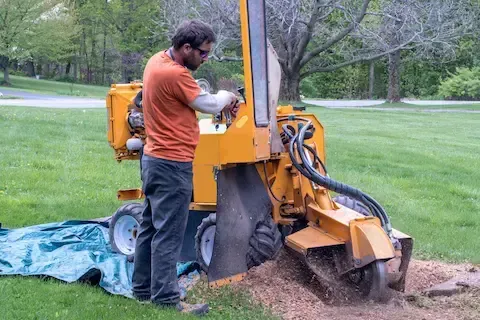
Removing Douglas Fir Stumps in Mountlake Terrace WA
Douglas fir stumps are a different category of problem than most other stumps you'll encounter in the Pacific Northwest. If you've had a Douglas fir removed from your property in Mountlake Terrace, what's left behind isn't just a wide wooden disc — it's the exposed top of a root system that can extend outward twenty feet or more, anchored by dense, resin-saturated wood that resists grinding equipment longer than almost any other species in the region. Before you assume a standard stump removal job, it's worth understanding exactly what makes Douglas fir stumps so demanding to deal with.
Why Douglas Fir Wood Creates Grinding Challenges
Douglas fir is classified as a softwood by botanical standards, but its density tells a different story. Old-growth and mature second-growth Douglas firs in Mountlake Terrace produce wood with a high resin content that essentially hardens the grain over decades. When a stump grinder contacts this material, the resin builds heat and friction faster than it does on alder, maple, or even red cedar stumps.
The practical effect is that grinding a Douglas fir stump takes significantly more time per inch of depth than other species. Grinder teeth wear faster. Operators need to work in shallower passes to avoid bogging down the machine. A stump that looks similar in diameter to a big-leaf maple stump may take twice as long to fully process. This is worth knowing upfront because it directly affects how jobs are quoted and how long your property will have equipment on it.
Resin also means the wood chips produced are sticky and clump more than typical grinding mulch. They don't spread or decompose as quickly, so if you're planning to replant the area, you'll want to know how to manage or remove the chip pile rather than just work it back into the soil.
Understanding the Lateral Root System
Douglas firs grow wide-spreading lateral root systems that prioritize horizontal reach over deep anchoring, especially in the shallow, well-drained soils common across the Mountlake Terrace area. These lateral roots can remain intact and continue to cause surface problems even after the stump is fully ground down.
Large surface roots that radiate outward from the stump base are visible, but the more concerning ones run just below the lawn or garden beds. As these roots decay — a process that can take years after grinding — they create soft spots, depressions, and occasionally mounding as they shrink and collapse underground. If you're installing a lawn, patio, or garden bed over the area, plan for the possibility of settling during the first two to three years.
For Stump Removal that includes addressing lateral roots, grinding depth matters significantly. Standard grinding typically goes six to eight inches below grade, which handles the main stump and the uppermost root mass. If the roots run close to hardscape, a fence line, or a foundation, your contractor should assess whether those specific root runs need additional attention beyond the central stump.
Access and Equipment Considerations on Mountlake Terrace Properties
Mountlake Terrace has a mix of older established neighborhoods with mature trees, narrow side yards, and lots that weren't designed with large equipment access in mind. Getting a stump grinder to a backyard Douglas fir stump is often the first logistical problem to solve.
Standard walk-behind grinders can fit through a standard gate opening, but they have less power and require more passes on dense conifer wood. Larger track-driven grinders are faster and more effective on Douglas fir, but they need a wider access path and can damage lawn areas if the ground is wet — which in Mountlake Terrace is most of the year between October and May.
If access is tight, be direct with your contractor about what the path to the stump looks like. Ask specifically whether the equipment they plan to use can handle Douglas fir density at the gate width you have available. On properties where a tree was removed close to the house or in a confined space, remote-controlled compact grinders are sometimes the right tool, though they take longer to complete the job.
Roots Near Utilities and Structures
One of the less obvious concerns with Douglas fir stumps in established Mountlake Terrace neighborhoods is how often the lateral roots have grown into, under, or adjacent to utility lines, irrigation systems, and concrete. Pacific Northwest conifers planted decades ago in what were once open yards have had time to spread roots under driveways and along fence lines.
Before grinding begins, it's standard practice to locate utility lines, but surface utilities like irrigation heads and low-voltage landscape wiring are often not marked and can be damaged during grinding. Walk the area beforehand and flag anything you know is underground near the stump. A contractor familiar with conifer root behavior will work more carefully around areas where roots likely run under concrete or close to structures.
What to Do With the Stump Site After Grinding
After grinding, you'll have a hole or depression filled with wood chip debris mixed with soil. For Douglas fir specifically, this material is high in carbon and low in nitrogen, meaning it will tie up soil nitrogen as it decomposes if left in place. This can inhibit grass or plant establishment if you're trying to revegetate quickly.
The practical approach is to remove as much of the chip material as possible before backfilling with topsoil. You can use the chips as mulch in a non-planting area, compost them separately, or have them hauled away. For more context on how grinding depth and chip removal affect your site afterward, the guide on stump grinding coverage covers those specifics in detail.
Timing and Seasonal Factors in Mountlake Terrace
Stump grinding can technically happen year-round in Mountlake Terrace, but the wet season creates real constraints. Saturated soil means equipment leaves deeper ruts, and the ground around the stump can shift during grinding, making depth control less consistent. If you have flexibility, scheduling Douglas fir stump removal during the drier months — typically June through September — gives the best results in terms of equipment performance, site access, and backfill stability.
If you're working around a construction timeline or a landscaping project that can't wait, late winter grinding is workable, but plan for more site restoration afterward and give the backfilled area time to settle before laying sod or installing hardscape over it.
