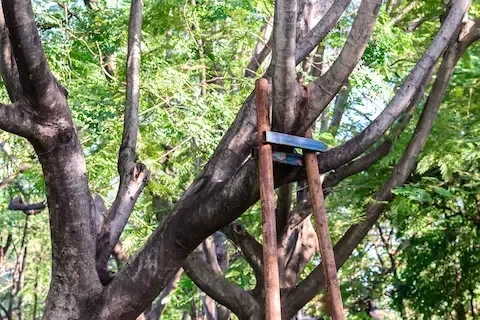
Cable System Inspections for Mountlake Terrace Trees
A cable system does real structural work — it redistributes load from a heavy or co-dominant stem into the broader scaffold of the tree. But the hardware that makes that possible is exposed to weather, slow wood growth, and seasonal stress cycles every single day. Without periodic inspection, you have no way of knowing whether the system is still doing its job or silently losing effectiveness. For property owners in Mountlake Terrace, where Pacific Northwest winters bring heavy rainfall, wind events, and significant snowfall on certain years, annual cable system inspections are not optional maintenance — they are the only reliable way to verify that the investment in structural support is actually working.
What a Cable System Inspection Actually Covers
A thorough inspection goes well beyond a visual glance at the cable from ground level. A qualified arborist examines every component of the system, starting with the hardware anchored into the tree's main scaffold. Anchor bolts are checked for signs of failure — thread exposure indicating the bolt has pulled through the wood, bark occlusion that may be concealing stress fractures, or movement in the fitting when load is applied. Any of these findings changes the management recommendation immediately.
The cable itself is assessed for corrosion, broken strands, kinking, or deformation along its length. On galvanized steel cable, surface rust is a cosmetic flag, but inner-strand corrosion is a structural one. The inspector checks tensile integrity by examining the full run of cable, including the termination points where swaged fittings or thimbles connect to the anchor hardware. A fitting that has begun to slip or deform at the crimp is a system that could fail without warning.
Sag is evaluated against the original installation standard. Cables that have gone slack — either because the tree grew and the anchor points shifted, or because the hardware has loosened — are no longer providing the load-sharing benefit they were installed to deliver. Conversely, cables that have become too tight as the tree has grown can create stress concentrations at the anchor points. Finding that balance requires someone who understands how the tree has changed since installation.
Hardware Corrosion in the Pacific Northwest Climate
Mountlake Terrace sits in a climate zone that accelerates metal deterioration. Extended periods of moisture, frequent freeze-thaw cycles in winter, and organic material accumulating around anchor bolt hardware create conditions where corrosion progresses faster than in drier climates. Galvanized hardware performs well initially, but the protective coating is finite. Once it is compromised, base metal corrosion follows, and the timeline from surface rust to structural weakness is shorter than most property owners expect.
Stainless steel hardware is specified in some installations for this reason, but even stainless is not immune to crevice corrosion when organic debris packs into the fitting. An inspection clears that debris, examines what is underneath, and documents condition in a way that lets you compare year over year. That documentation matters if the tree is ever involved in a property damage claim — it demonstrates that appropriate care was taken.
Anchor Bolt Loading and What Changes Over Time
When a cable system is installed, the anchor bolts are positioned and sized based on the tree's current structure and the anticipated load the cable will bear. Trees are not static. Crown growth, limb extension, and the gradual shift in weight distribution that happens as a tree matures all change the load picture. A bolt that was appropriately sized at installation may be working harder five years later simply because the crown above it has grown.
Inspections identify these shifts before they become failures. An arborist looking at a system that is a few years old is also evaluating whether the original installation remains appropriate for the tree's current condition, or whether the system needs adjustment — a second anchor point, repositioned cable, or updated hardware. Tree Cabling in mature trees often requires this kind of iterative management rather than a one-time installation approach.
Cable Sag Limits and Why They Matter
Cable tension specifications typically call for a specific amount of sag relative to the span length. This is not arbitrary — it accounts for dynamic loading. When wind moves the crown, the cable needs to absorb that movement rather than transmitting a sudden jerk load to the anchor bolts. A cable installed with no sag behaves like a rigid member during wind events, and rigid members either hold or fail suddenly. A cable with appropriate sag has some elasticity built into its geometry.
When sag exceeds the allowable limit, the cable is no longer providing the load-sharing function at the tension levels it was designed for. At that point, the limbs it was supporting are effectively unsupported during significant loading events. This is often discovered during an inspection after a major wind event, when the cable appears undamaged but has simply stretched or loosened enough to go out of specification. Re-tensioning or hardware replacement restores function.
Inspection Intervals That Make Sense for Mountlake Terrace Properties
Industry standards from the American National Standards Institute support annual inspections for cable systems, and the climate in Mountlake Terrace reinforces that schedule. Annual inspections catch hardware corrosion early, identify load changes before they become failures, and verify that sag is within specification before another winter storm season. They also keep the inspection record continuous, which matters for both property management and liability purposes.
Some systems warrant more frequent review — particularly those on trees with significant defects that the cabling is compensating for, or systems that are older and approaching the expected service life of the hardware. An arborist familiar with the specific tree can advise on whether the annual standard is adequate or whether a more frequent schedule is appropriate. For guidance on what a properly managed system looks like over time, reviewing cabling system coverage provides useful context on how these decisions are made in practice.
What Happens When Inspections Are Skipped
The scenario that follows deferred inspections is predictable. Hardware deteriorates past the point where replacement is straightforward. Cable loses tension without anyone noticing. Anchor bolts work loose inside wood that has grown around them. Then a wind event in late fall or a heavy, wet snowfall in January loads the system the way it was designed to handle — except the system is no longer capable of handling it. The result is a structural failure that puts property and people at risk in a way that a simple annual inspection would have prevented.
If you have a cable system on a Mountlake Terrace tree and you are uncertain when it was last professionally inspected, that uncertainty is reason enough to schedule one now. The cost of an inspection is a fraction of what you are protecting, and far less than what you are risking.
